Content
Jacques Rupnik, Jindřich Toman, and Veronika Tuckerová will be speaking at the Czech and Slovak Studies Workshop 2026.
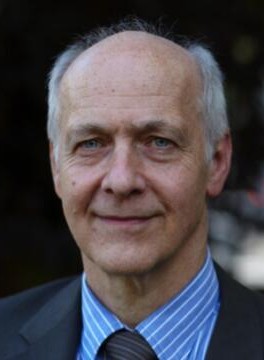
Jacques Rupnik
Jacques Rupnik was born in Prague and educated at the Sorbonne University of Paris and at Harvard. He is Research Professor of political science at Sciences Po, Paris, and visiting professor at the College of Europe in Bruges. He is a popular political commentator and publicist. He has been an advisor to the President Vaclav Havel (1990-1992) and advisor to the European Commission 2007-2013; he is member of numerous scientific councils and boards. His interests include democratic transition, European integration, EU enlargement, EU neighborhood policies, nationalism, and democracy in Balkans and Central and Eastern Europe.
His recent book, The Fates of Central Europe Between Hitler and Stalin: Selected Writings of Josef Guttmann, will be published by University of Chicago Press in 2026. In the 1930s, Guttmann was a leader of the Communist Party of Czechoslovakia before he broke with the party over the Comintern’s strategy of helping Hitler to power. A harsh critic of Stalin’s dictatorship and foreign policy, Guttmann became a prominent leftist opponent, outcast by the Party. To escape Nazism, he exiled and settled in New York, where he worked under a pseudonym as a leading expert on events in the Soviet bloc and a critic of totalitarianism. Featured in this book are his Czech texts from the 1930s as well as studies and essays he later wrote on the nature of communist regimes, genocide, and anti-Semitism.
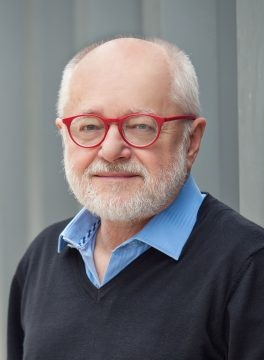
Jindrich Toman
Trained in Czechoslovakia, Germany and USA, Jindrich Toman follows an academic path defined by languages and cultures of Central Europe. In the 1980s and 1990s he focused on generative linguistics, with special emphasis on Czech and German (Wortsyntax: Eine Diskussion ausgewählter Probleme deutscher Wortbildung, 1983), as well as on the history of linguistics (The Magic of a Common Language: Mathesius, Jakobson, Trubetzkoy and the Prague Linguistic Circle, 1995). His recent research has been situated at the interfaces of cultural history and visual culture, with topics including modernist book design (Czech Cubism and the Book, 2004; Photo/Montage in Print, 2009). He has also co-curated several exhibitions, including Jindrich Heisler: Surrealism Under Pressure (Art Institute of Chicago, 2012).
His book, Bohemia’s Jews and Their Nineteenth Century: Texts, Contexts, Reassessments, was published by University of Chicago Press in 2023. This book on Jewish culture and literature focuses on the “quiet” decades of the nineteenth century, a scarcely written-about period of time in Bohemian Jewish history. Using a myriad of sources, including travelers’ accounts, poems, essays, short stories, guides, and newspaper articles, the volume explores Jewish expression, Jewish-Czech relations, and the changing attitudes toward Jews between the 1820s and 1880s.
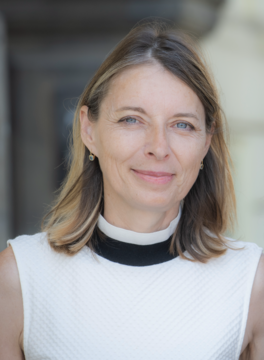
Veronika Tuckerová
Veronika Tuckerová teaches Czech at Harvard University's Slavic Department. Her interests include Czech and German literature, art and literature of dissent, visual arts, and translation theory and practice. Her articles appeared in journals such as The New German Critique, Journal of World Literature, and brücken. Tuckerová is a long-term contributor to the Prague-based journal Revolver Revue and the monthly Roš chodeš. She edited and co-translated the first bilingual English edition of the poetry of Ivan Blatný, The Drug of Art, which received several awards. She collaborated on two major exhibitions held in Prague on art and dissent, including From Franz Kafka to the Velvet Revolution.
Her book, Reading Kafka in Prague: On Translation, Samizdat, Censorship, Export, and Dissent, was published by Bloomsbury Academic in 2025. Reading Kafka in Prague is the first book-length study of the reception of Franz Kafka in his homeland, Czechoslovakia, focusing on the period from his death to the end of the communist era in 1989. Using a broad comparative framework with a focus on translation and intercultural transmission, as well as archival materials and interviews with Czech intellectuals, Reading Kafka in Prague shows how Kafka shaped the lives and perspective of his Czech readers, from one-time Communists to émigrés to dissidents, scholars, and artists.